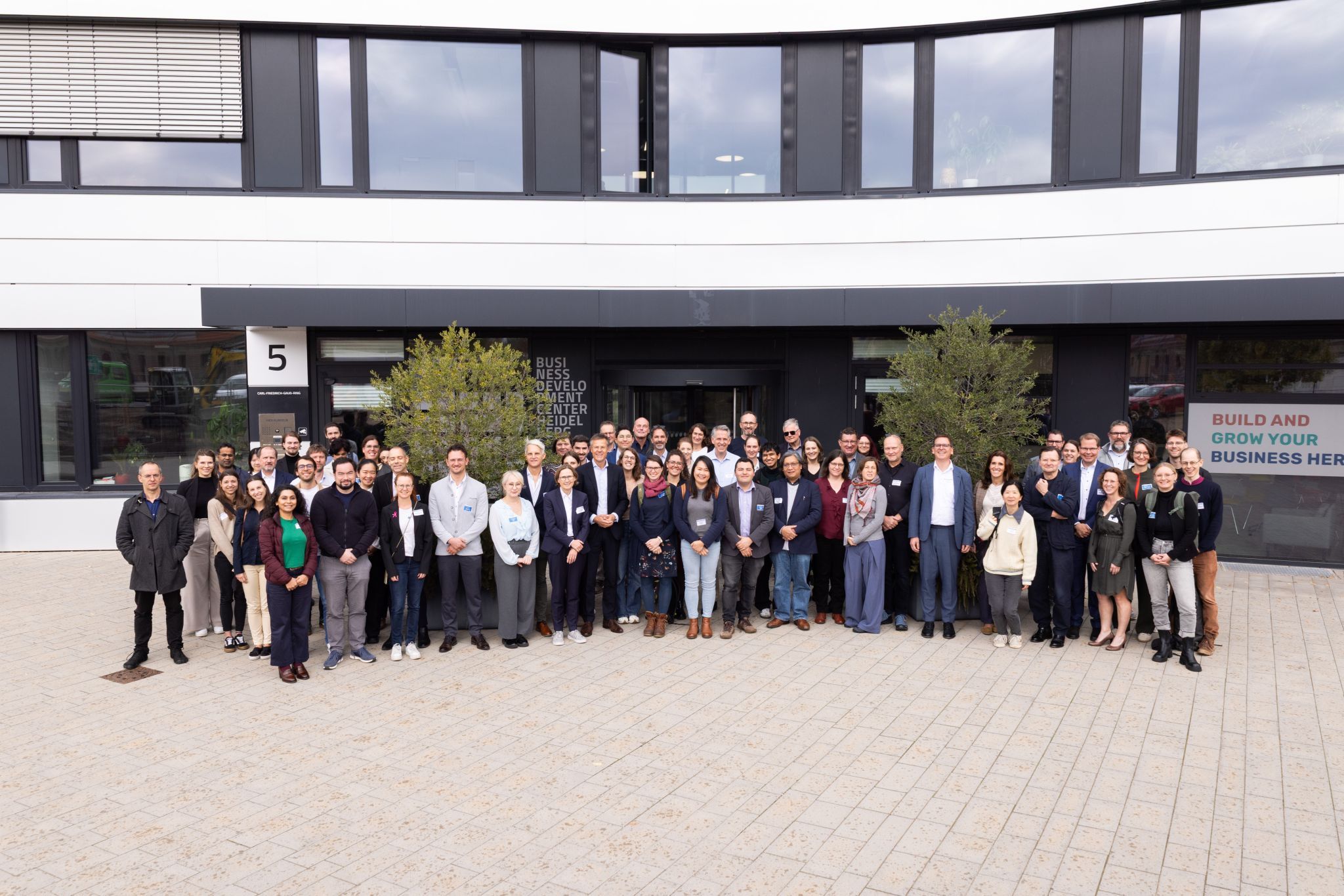
Thera Health Policy & Access participated in Science Meets Industry Day in Heidelberg, Germany, on October 19–20, bringing a Latin American perspective to discussions on translational medicine, scientific innovation and academia-industry collaboration.
Sebastián Millar, Senior Strategic Advisor – Advanced Therapies & Precision Medicine at Thera Health Policy & Access, participated in Science Meets Industry Day, held in Heidelberg, Germany, on October 19–20. The event brought together researchers, industry and experts to explore the challenges involved in translating scientific discovery into innovations that can ultimately reach patients.
The event, held with the participation of the German Cancer Research Center (DKFZ), the German Cancer Consortium (DKTK) and the Association of Research-Based Pharmaceutical Companies (vfa), provided a space to discuss the uncertainty surrounding early-stage innovation and the complex decisions required to move promising research towards clinical development.
A central theme throughout the discussions was the gap between a promising scientific discovery and a treatment that can eventually reach patients. Decisions around preclinical and clinical development, intellectual property, regulation, partnerships and investment are often made while evidence is still emerging and different stakeholders carry different responsibilities and risks.
For Thera Health Policy & Access, this perspective is particularly relevant. The conditions that ultimately shape access to innovation begin long before a new technology reaches regulators, health technology assessment bodies or healthcare systems. They are influenced by earlier decisions about which discoveries advance, where research takes place, which collaborations are built and which capabilities countries develop along the way.
Among the discussions highlighted by Millar was Niko Andre’s presentation for AstraZeneca, “From Science to Scale: Are we turning Germany’s scientific excellence into innovation at scale?” The presentation placed Germany’s translational challenges within a wider discussion about international competitiveness and Europe’s ability to transform scientific excellence into innovation at scale.
Emma Phillips’ presentation of DrugSeq Solutions at DKFZ brought the discussion to a specific scientific challenge. By linking drug uptake with molecular response within the same cell, the approach could help distinguish between drugs that fail to enter a cell and cases in which a cell resists their effects, providing potentially valuable information when deciding which candidates warrant further development.
The “Translational Challenges” discussion, with Dr. Tim Flink, also explored barriers to academia-industry collaboration and the challenges surrounding the transition from preclinical to clinical development, intellectual property and regulation.
For Sebastián Millar, the experience also raised a broader question for Latin America: how can the region participate earlier in the global innovation pathway, rather than engaging primarily once technologies are ready for regulatory assessment, reimbursement or adoption?
Closer collaboration between Latin America, Germany and Europe could create opportunities for joint research, clinical studies, knowledge exchange and the development of local scientific and institutional capabilities. At the same time, building these connections requires understanding what Latin American institutions can bring to international partnerships and what conditions are needed to make such collaborations sustainable and mutually valuable.
“Understanding the challenges of translational medicine in Germany is helping us look further upstream and ask how Latin America can participate earlier in the innovation process, through research collaboration, clinical studies and capability building. These are important connections to explore if we want our health systems to be not only recipients of innovation, but increasingly part of the ecosystems that help create it.”
For Thera Health Policy & Access, engaging in international conversations such as these is part of a broader commitment to connecting science, innovation, health policy and access, while building bridges between Latin America and global health and innovation ecosystems.
Photo credits: Marius Stark Foto&Video / Neri Kranz Photography